Shops, offices, warehouses and more
Commercial polished concrete in Perth
A commercial floor is judged on different things to a home: how it copes with hundreds of people a day, whether it has enough grip at a wet entry, and how long the business has to close while it's done. We polish concrete floors for shops, offices, showrooms, cafés, warehouses, gyms and schools across Perth, and we work nights and weekends so you can keep trading.
- Price
- Per project, after a site visit
- Spaces
- Retail, offices, hospitality, industrial, education
- Hours
- Nights and weekends available
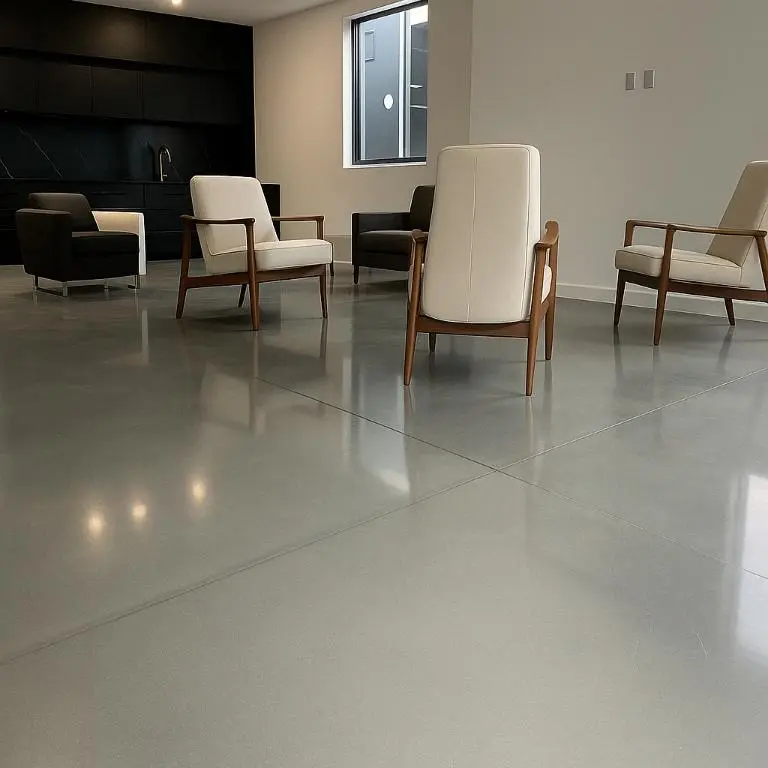
Why businesses choose polished concrete
The strongest argument is what happens after handover. Vinyl, carpet tiles and coated floors wear out and have to be replaced or recoated, usually with the business closed while it's done. A polished floor has no coating on top to wear through. Day to day it's swept and machine-scrubbed, and every few years a busy floor gets a light re-polish to bring the shine back, which is far quicker than replacing a floor covering.
It's also hard. Trolleys, pallet jacks, rolling racks and stiletto heels don't dent or tear it, and a densified slab doesn't shed the fine dust that bare concrete does. A polished surface reflects light too, which in a warehouse or a big retail floor makes the space feel brighter.
What matters in your type of space
The same polished floor has a different job in a café than in a warehouse.
Retail and showrooms
Sheen and stone exposure set the look, and a higher polish shows off product under display lighting. The entry is the weak point, because wet shoes at the door call for good matting and a grippier finish in that zone.
Offices and fit-outs
Polished concrete suits open-plan offices and fit-outs with exposed services. Hard floors carry sound, so plan rugs, acoustic panels or ceiling treatment with your designer. We fit into the fit-out programme so the floor is done before joinery and partitions go in.
Cafés and hospitality
Spills, grease and constant mopping are normal. Front of house can be polished and guarded against stains, while kitchens and the floor behind the bar need much more grip and are usually better with an anti-slip coating.
Warehouses and industrial
A densified, polished warehouse floor stops dusting, takes forklifts and pallet jacks, and is easy to keep clean. Areas with chemical spills or battery charging may need epoxy instead.
Gyms and studios
Polished concrete handles foot traffic and cleans easily, but dropped weights will chip any floor, so lifting areas still need rubber matting. Change rooms and showers need a wet-area level of grip.
Schools and community buildings
Corridors, halls and canteens take heavy traffic and constant cleaning. Work can be scheduled for school holidays or weekends, when the building is empty.
Slip resistance and AS 4586
Slip resistance is the question that matters most on a commercial floor, both for safety and for liability. In Australia, new floor surfaces are tested and classified under AS 4586. The most common test is the wet pendulum test, which gives a P rating from P0 to P5, where a higher number means more grip when wet. The handbook SA HB 198 then suggests minimum ratings for different areas, and places that get wet, such as entries, ramps, commercial kitchens and change rooms, need far more grip than a dry internal floor.
The rating your floor needs depends on how the space is used, so it should come from your designer, builder or the building's specification. What we control is the finish. A lower sheen, an anti-slip treatment and proper entry matting all add grip where it's needed, and we'll talk through those options against your requirement at the site visit.
Working around your trading hours
Most businesses can't close for a week. We work nights and weekends, so the floor is done while you're shut, and larger floors are staged section by section so part of the space stays open while we work on the rest.
Grinding is noisy and makes dust, so in shared buildings and shopping centres we plan the loudest stages with the building manager and keep work areas closed off. On a new fit-out the floor usually goes down early, then gets covered and protected while the other trades work, with a final polish or clean just before handover.
New build, existing floor or a worn polish
New builds and fit-outs
Bring us in before the slab is poured if you can. The concrete mix, how flat it's finished, how it's cured and how it's protected during construction all decide the final floor. Many commercial slabs are ground early, covered while the build goes on, and polished near handover.
Existing floors
Old vinyl, carpet tiles and coatings come up first, and the adhesive is ground off as a separate grinding stage. The slab underneath will have marks, patches and old fixings that show in a polish. That suits a lot of fit-outs. If it doesn't suit yours, a coating may be the better choice.
Re-polishing a worn floor
Polished floors in busy shops and offices dull in the walkways over time. A re-polish takes the surface back through the finer grits and restores the shine, usually without grinding again, and it can often be done out of hours.
How a commercial job runs
Every commercial floor starts with a site visit, because the scope depends as much on how the space is used and when we can get in as on the slab itself.
At handover we give your cleaning staff or contractor a simple care guide, since the cleaning routine decides how long the shine lasts.
For the finish options themselves, such as stone exposure and sheen, our polished concrete page has the detail.
- Site visit. We look at the slab, talk through how the space is used, and note any slip, timing or access requirements.
- Scope and staging. You get a price for the project and a plan for when and in what order each area is done.
- Preparation. Old coverings and adhesive are removed and cracks and joints repaired.
- Grind and polish. The floor is ground, densified and polished to the agreed finish.
- Protect. A guard goes on, with anti-slip treatment in the areas that need it.
- Handover. We walk the floor with you and leave a care guide for your cleaners.
What commercial polished concrete costs
Commercial floors are priced per project, after a site visit. The area matters, but so do the condition of the slab, the finish you want, any slip requirements, how the work has to be staged and whether it's done out of hours.
Large open floors usually cost less per square metre than small or broken-up spaces, because the machines can run longer between setups.
At the site visit
We check the slab, ask how the space is used and when we can work, and give you a project price with a staging plan.
Keeping a commercial floor looking good
Matting at every entry
Most wear on a commercial floor is grit carried in from outside, and in Perth that means sand. Good matting inside and outside the doors catches it before it reaches the polish.
The right cleaning routine
Dust mop or sweep daily, then clean with an auto-scrubber or mop and a pH-neutral cleaner. Acidic or harsh cleaners dull the surface and can leave residue that makes it slipperier.
Burnishing
Periodic burnishing with a high-speed machine and the right pad lifts the sheen between re-polishes. Ask us what suits your floor.
Re-polish the traffic lanes
Walkways and entries dull first. Re-polishing those lanes before they wear right through keeps the floor even and costs less than leaving it.
Commercial polished concrete questions
Is polished concrete slippery in a commercial space?
Dry, it has good grip. Wet, a high-gloss polish can be slippery, which is why entries, ramps and wet areas need a lower sheen, an anti-slip treatment and good matting. The rating your floor needs should come from your designer or specification, and a NATA-accredited tester can confirm it once the floor is done.
Can you polish our floor outside trading hours?
Yes. We work nights and weekends, and larger floors can be staged in sections so part of the space stays open. We plan the schedule with you, and with the building manager in shared buildings, at the site visit.
How long will our business need to close?
It depends on the area, the condition of the slab and the finish. Working nights and weekends and staging the floor in sections means many businesses close for far less time, or not at all. The timing is set out in the scope we give you after the site visit.
Can you polish the slab under old vinyl or carpet tiles?
Usually, yes. The covering is lifted, the adhesive is ground off, and the slab is polished. Old marks, patches and fixings will show in the finish, so we look at the slab with you before deciding whether polish or a coating suits the space better.
Does polished concrete handle forklifts?
Yes. A densified, polished slab handles forklifts and pallet jacks well and doesn't dust. Areas with chemical spills, battery charging or heavy impact may be better with an epoxy system, which we also install.
How do our cleaners look after a polished concrete floor?
Daily dust mopping or sweeping, then an auto-scrubber or mop with a pH-neutral cleaner. Avoid acidic and harsh cleaners. Periodic burnishing keeps the sheen up, and we leave a care guide for your cleaning staff at handover.
Do you work with builders on new commercial fit-outs?
Yes. On new builds and fit-outs we work to the builder's programme, ideally from before the slab is poured, so the floor is ground, protected during construction and polished near handover.
Free on-site measure and quote
Book a site visit
Send us a few details and we'll be in touch to arrange a time to look at your slab, measure up and price the finish you want. There's no cost and no obligation.
What helps us quote
The type of space, roughly how many square metres, whether it's a new build, a fit-out or an existing floor, when the work could happen, and any slip rating or downtime requirements.
Tell us about your floor
All fields are needed so we can get back to you.