Adhesive removal and floor preparation
Concrete grinding in Perth
Pulled up the tiles or carpet and found a slab covered in glue, mortar and ridges? We grind it back to clean, sound concrete so your next floor goes down properly. We remove tile adhesive, carpet and vinyl glue, paint and old coatings, and take down high spots, in homes and commercial spaces across Perth.
- Price
- After the free measure
- What we remove
- Adhesive, coatings, high spots
- First step
- Free on-site measure
What's going down next decides how we grind
A slab ready for tiles isn't the same as a slab ready for a floating floor or an epoxy coating. Tell us what's going on top and we'll grind to suit it.
New tiles
Tilers need a slab that's clean and sound, with no loose mortar or old adhesive for the new adhesive to sit on. It doesn't need to be smooth, and a slightly rough surface actually helps the bond. Large-format tiles are the exception, because they need a much flatter slab, so check your tiler's tolerance before we start.
Timber, hybrid or vinyl
These are the fussiest about flatness. Floating floors rock and click over high spots, and glued-down vinyl shows every ridge underneath it. Grinding takes off the old adhesive and the high spots. Dips need a levelling compound, which your flooring installer will usually apply. Ask them for their flatness requirement and we'll grind to it.
Epoxy or another coating
A coating needs a clean, open surface to grip, with no sealer, oil or old paint left behind. The grind leaves a texture the coating can key into. If any old coating stays on the slab, the new one is only as strong as that old layer. More on this on our epoxy flooring page.
Polished or honed concrete
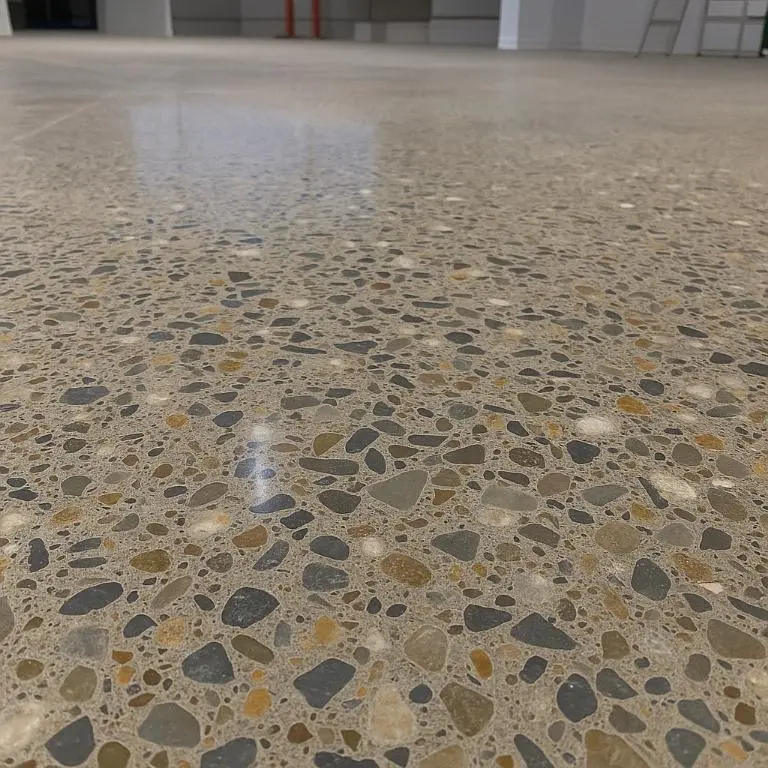
Here the grind is the first stage of the finish. Once the glue is off we keep going, opening up the stone and refining the surface. If you're thinking about polished or honed concrete, tell us before we start, because it changes how we grind from the first pass.
What we grind off
What's on the slab decides how long the job takes far more than the size of the room does.
Tile adhesive and mortar
Thin modern adhesive comes off with a coarse grind. Older tiling laid on a thick sand and cement bed takes much longer, and the bulk of that bed needs breaking up when the tiles are lifted.
Carpet glue and gripper holes
Carpet glue is usually thin and comes off readily. Gripper strips leave rows of nail holes around the walls. A new floor covering hides them, and on a slab being polished we fill them.
Vinyl and lino adhesive
Some vinyl adhesives are soft and gummy and clog the diamonds, which slows things down. Dark adhesive under very old vinyl or lino tiles needs testing before anyone grinds it. See the note on asbestos below.
Paint, overspray and plaster
Builders' overspray and plaster splatter come off quickly. Several coats of paint on a garage or workshop floor take more passes.
Old epoxy and sealers
Hard coatings are among the slowest things to remove. How thick they are and how well they've bonded decide how long it takes.
High spots, lips and ridges
We grind down lips at joints, trowel ridges and humps so the floor is flatter. Grinding only takes concrete away, so it lowers high spots but won't raise low ones.
Grinding flattens. It doesn't level.
Grinding takes high spots down, but it can't fill a dip. A slab with low areas needs a levelling compound, which is a job for your flooring installer or a floor levelling contractor. We only grind.
On most renovations the order goes like this: the old floor covering comes up, we grind off the adhesive and the high spots, then the installer fills any dips and lays the new floor. If your installer has a flatness requirement, send it to us before the job and we'll grind to suit, so nobody finds out on installation day.
How a grinding job runs
We grind, and we don't lift floor coverings. Have the tiles, carpet, vinyl or timber taken up first, by you or another trade, and leave the slab with just the adhesive and mortar on it.
The rooms need to be completely empty. Grinding concrete makes fine dust, so empty the built-in robes and cupboards in those rooms too, and close off the rest of the house where you can. We'll need power on site and a clear path in for the machines.
Once we've finished, the slab is ready for the next trade, or for us to carry on if it's being polished or honed.
- Check the slab. We look at what's on it and check for cracks, damp patches and anything that needs testing before grinding.
- Bulk grind. Coarse diamonds take off adhesive, coatings and high spots across the open floor.
- Edges and corners. Smaller hand grinders work in to the walls, doorways and around anything fixed to the floor.
- Clean up. The slab is vacuumed and left clean for whatever goes down next.
What concrete grinding costs
We price grinding after the free measure, because what's stuck to the slab matters more than its size. A room of thin carpet glue and a room of thick tile mortar can be the same size and very different jobs.
The other things that shape a price are how many separate rooms there are, since one open area is quicker per square metre than five small ones, how much edge work there is, whether high spots need taking down as well, and how easy it is to get the machines in.
At the free measure
We check what's on the slab and how stubborn it is, ask what's going down next, and give you a price for the grind your floor needs.
Before you book: old adhesive and asbestos
Some older floor materials in Australian homes contain asbestos, including some old vinyl and lino tiles and the dark, tar-like adhesives used under them. In a house built or renovated before 1990, treat old vinyl tiles and black adhesive as suspect until they've been tested. Grinding asbestos material releases fibres into the air, so it isn't something to find out about halfway through a job.
If that sounds like your floor, have a sample tested by a licensed asbestos assessor before the floor covering comes up, and tell us about it when you enquire. Modern tile adhesive, carpet glue and recent vinyl adhesives aren't a concern.
Concrete grinding questions
Can you remove tile adhesive without damaging the slab?
Yes. Grinding takes off the adhesive along with a very thin skin of concrete, and the slab stays sound. The surface will look different to how it did originally, and old patches or repairs may show, which doesn't matter if a new floor is going on top.
Is concrete grinding dusty?
Grinding concrete makes fine dust, so the rooms being ground need to be empty, including built-in robes and cupboards, and the rest of the house should be closed off where possible. We'll talk through how the job will be set up in your home at the measure.
Will grinding make my floor level?
It makes it flatter by taking down high spots, ridges and lips at joints, but it can't fill dips. Low areas need a levelling compound, applied by your flooring installer or a levelling contractor after we've finished grinding.
How long does concrete grinding take?
A single room of thin carpet glue can be quick, while a whole house of thick tile mortar or old epoxy takes much longer. We give you a timeframe with your quote once we've seen what's on the slab.
Do I need to remove the tiles before you grind?
Yes. We don't lift floor coverings, so tiles, carpet, vinyl or timber need to come up first, either by you or another trade. Leave the adhesive and mortar on the slab and we'll take it from there.
Can you grind a garage floor before epoxy?
Yes. Grinding removes oil-soaked surface, paint and old coatings and leaves a texture the epoxy can grip. It's the normal first stage of an epoxy garage floor, and our epoxy flooring page covers the rest.
Can I polish the slab once the glue is off?
Often, yes, and the adhesive removal becomes the first stage of the polish. Old gripper holes, patches and cracks will show in a polished finish, so ask us at the measure what the slab can realistically look like. Our polished concrete page explains the options.
Free on-site measure and quote
Book your free measure
Send us a few details and we'll be in touch to arrange a time to look at your slab, measure up and price the finish you want. There's no cost and no obligation.
What helps us quote
What's on the slab now, such as tile adhesive, carpet glue, vinyl glue, paint or a coating, what's going down next, roughly how many square metres, and roughly how old the house is.
Tell us about your floor
All fields are needed so we can get back to you.